
Dr. Hayan’s Introduction and Journey to South Korea
- GKT web desk

- 5 days ago
- 12 min read
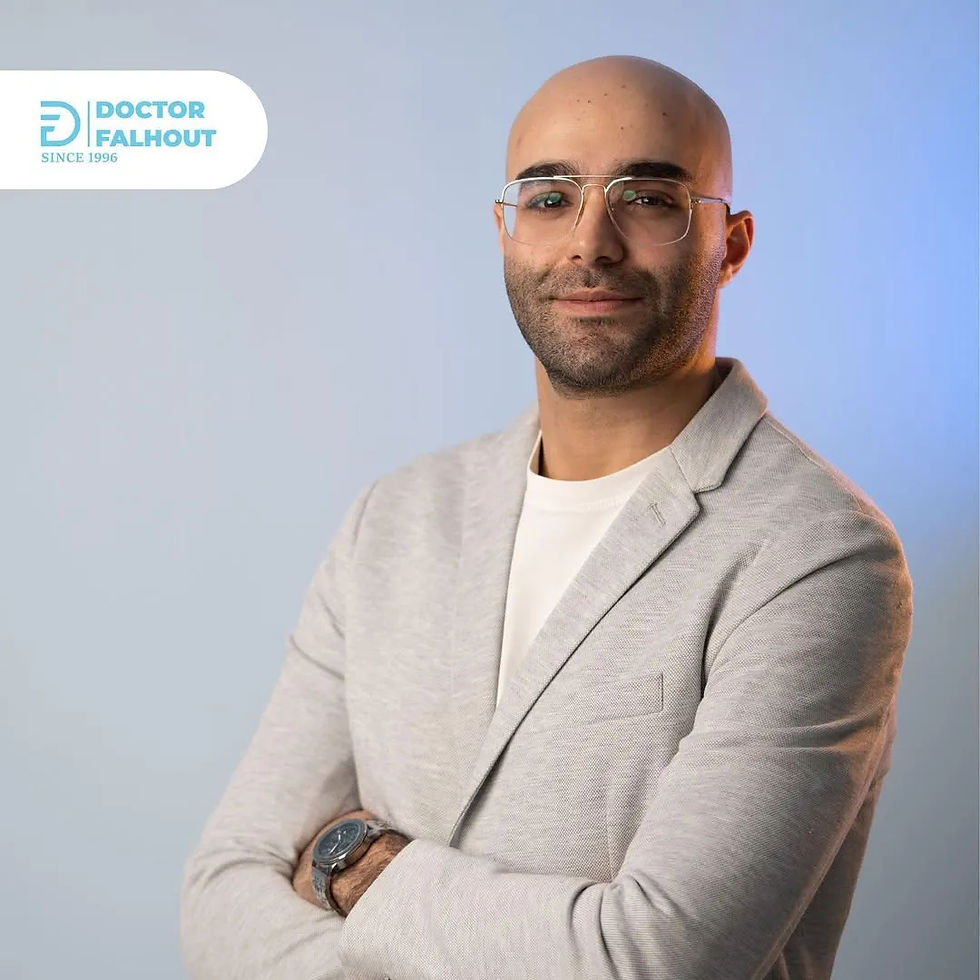
I am Dr. Hayan Falhout, an implantologist and cosmetic restorative dentist with an MClinDent in Fixed and Removable Prosthodontics from King's College London. With 10 years of clinical experience and a strong interest in implant dentistry, restorative excellence, and advanced clinical technologies, I am dedicated to delivering high-quality, patient-centered care. Having grown up in the UAE, I am also deeply passionate about contributing to the advancement of dentistry in the country and helping shape its future with higher standards of care and innovation.
Last October, I had the privilege of visiting South Korea with MegaGen Implant as part of a highly valuable professional experience focused on innovation, education, and excellence in implant dentistry. Our journey began in Seoul before continuing to Daegu, where the main scientific and industrial part of the visit took place. It was a unique opportunity to gain deeper insight into the philosophy, precision, and advanced infrastructure behind one of the leading names in the implant industry.
Our stay in Daegu added a special personal dimension to the experience. We stayed at the Four Seasons Hotel, where the in-room natural spring water created a memorable sense of comfort and relaxation after each day's professional activities. Visiting Korea in October made the journey even more remarkable, as the autumn season filled the cities with beautiful red and orange leaves, adding warmth and emotion to the entire experience.
During our time in Daegu, we visited Dr. Park, the CEO of MegaGen and the key figure behind the company's success, at his hospital and educational institution. We also toured the MegaGen implant manufacturing facility, where we observed the production process in detail. The level of technological sophistication was striking, from robotic automation to the strict hygiene, sterilization, and quality control protocols followed throughout implant fabrication, packaging, and shipment.
Another important part of the visit was MegaGen's research and development institute, where we exchanged feedback on the implant system, discussed its strengths, and highlighted areas for further improvement. It was encouraging to see how seriously clinician input is valued and how committed the company is to continuous innovation and development.
Beyond the professional program, South Korea itself left a lasting impression on me. The kindness and respect of the people, the calm nature of the culture, and the beauty of the autumn scenery made the trip both professionally inspiring and personally meaningful. After Daegu, we spent the remainder of the trip in Seoul, where I had the chance to experience a different side of Korea's character. Seoul felt vibrant, modern, and full of life, yet still carried a sense of balance and elegance. From its lively streets and evening atmosphere to its traditional restaurants and beautiful seasonal scenery, the city offered a memorable blend of energy, culture, and refinement. I only wished I had more time to explore Seoul more deeply and discover more of the country. Overall, it was an enriching journey that combined scientific learning, industrial insight, and genuine cultural appreciation.
Q1.What inspired you to pursue a career in implant dentistry and prosthodontics? (임플란트 및 심미 보철 분야를 선택하게 된 계기는 무엇인가요?)
What has always drawn me most is people. I genuinely enjoy connecting, socialising, and learning from others. I find it fulfilling to hear different perspectives, exchange ideas, and understand the many ways people experience life. That human connection has always been something I value deeply. Dentistry, for me, came from that same place. It started with a desire to serve my community in a meaningful way, but over the years it became much more than that.
As my skills developed, I fell in love with the profession itself and with the real impact it can have on a person’s life. From a prosthodontic perspective, what inspires me most is the ability to restore more than just teeth. It is about restoring function, confidence, comfort, and quality of life. There is something incredibly rewarding about combining precision, artistry, and patient care to create a result that can truly change how someone feels every day.
Q2.Over your 10 years of clinical experience, what core treatment principles have become most important to you? (약 10년간의 임상 경험을 통해 가장 중요하게 생각하게 된 치료 원칙은 무엇인가요?)
For me, prevention and quality of life are at the heart of great dentistry. It is not only about repairing what is damaged, but about protecting what can be preserved and improving how a patient feels, functions, and lives every day. As a prosthetic and cosmetic dentist, I have learned to look beyond the immediate issue and think in terms of long-term structure, function, aesthetics, and wellbeing.
That is why prevention plays such a central role in my philosophy. I see it across three levels: primary prevention, stopping disease before it starts; secondary prevention, identifying it early and limiting its progression; and tertiary prevention, restoring the damage in a way that protects long-term oral health.
Especially in prosthodontics and cosmetic care, where patients are often affected not only physically but emotionally, I believe our role is to restore comfort, confidence, and smile harmony, not just teeth. This way of thinking is what led me to focus on year-round programmes of care in our clinic, because I believe the best outcomes come when dentistry is continuous, personalised, and centred on long-term health, aesthetics, and quality of life rather than short-term fixes.
Q3.What are the most significant trends or innovations in implant dentistry that you are currently focusing on? (최근 임플란트 치의학에서 가장 주목하고 있는 기술이나 트렌드는 무엇인가요? )
One of the most significant developments I am personally focused on in implant dentistry is the shift toward non-surgical guided implant placement. I often describe it in simple terms for patients as “no surgery, no sutures, and far less pain.” Of course, clinically, it is more nuanced than that, but the philosophy behind it is clear: to make implant treatment more precise, less invasive, and far more comfortable for the patient.
What excites me most is how digital dentistry has transformed implant planning into something highly predictive and incredibly refined. Today, we can combine digital intraoral scans, radiographic imaging such as CBCT, clinical photographs, and advanced planning software into one integrated system. This allows us to create a highly realistic virtual representation of the patient and plan treatment in detail before even beginning the procedure. We can assess bone availability, identify critical anatomical structures, select the most suitable implant type and dimensions, and determine the ideal angulation and position with a level of precision that was simply not possible before.
I am also very interested in the continued evolution of dynamic navigation, GPS-style real-time guidance, and robotic-assisted implant placement, whether semi-robotic or fully robotic systems. These technologies represent a very exciting direction for the future of implant dentistry because they add another level of control, safety, and reproducibility to treatment. Alongside this, artificial intelligence-powered software is becoming increasingly valuable in helping clinicians analyse important parameters for implant placement, improve decision-making, and support more efficient treatment workflows.
What I find most meaningful about all of these innovations is that they are not just about technology for the sake of technology. They are about improving the patient experience, reducing surgical trauma, and making treatment more comfortable and predictable. Clinical research has shown that these minimally invasive approaches can significantly reduce postoperative discomfort, with some studies suggesting that painkiller use may be reduced by as much as half. In my own practice, I have also seen patients who did not need to take any painkillers from the following day onwards. For me, that is where the true value of innovation lies: not only in precision and efficiency, but in delivering a gentler experience, faster recovery, and better overall outcomes for the patient.
Q4.How did your visit to South Korea last October come about? (지난 10월 한국 방문은 어떻게 이루어지게 되었나요? )
My visit to South Korea last October came through MegaGen Dental Implant Company, and it was a very special opportunity for me both professionally and personally. I was invited to be part of an experience centred around innovation, education, and excellence in implant dentistry, which made it something I was very excited and honoured to join.
For me, it was more than just a trip. It was a chance to see first-hand the philosophy, precision, and advanced systems behind one of the leading names in the implant industry. The journey began in Seoul and continued to Daegu, where much of the scientific and industrial side of the visit took place.
What made it even more memorable was the way it combined professional learning with cultural experience. Visiting Korea in October, with its beautiful autumn atmosphere, added a very special dimension to the journey. Overall, it was an unforgettable experience that deepened my appreciation for innovation and progress in implant dentistry.
Q5.What were your expectations from your collaboration with MegaGen Implant? (MegaGen Implant와의 협업에서 가장 기대했던 부분은 무엇이었나요?)
What I expected most from my collaboration with MegaGen Implant was to gain a closer understanding of the people behind the brand and the thinking that led to so much innovation. For me, it was important to see how that vision was built, because it is exactly what gave me confidence in their system and led me to start using it in my own practice.
One of the innovations MegaGen is especially known for is the AnyRidge concept, which I found particularly impressive. What drew me to it was the idea of a system designed to perform across different implant situations, especially in soft bone, which can often be one of the more challenging clinical scenarios. That concept of versatility and stability was something that really stood out to me.
Meeting the R&D team was one of the most insightful parts of the trip. I still remember discussing with them how this idea was developed and what inspired it. What I felt in those conversations was not only scientific knowledge, but also a real sense of dedication, pride, and belief in what they were creating. That human side of innovation made a strong impression on me, and it made the collaboration feel even more meaningful.
Q6.What impressed you the most about the Korean implant industry during your visit? (한국 임플란트 산업을 직접 경험해보시면서 가장 인상 깊었던 점은 무엇인가요? )
What impressed me most about the Korean implant industry was how far it has progressed and how strongly it has established itself on the global stage. That level of success does not happen by chance. It comes from dedicated teams who truly believe in their product, their vision, and what they are capable of achieving.
During my visit, I was struck by how driven they are to excel in everything they create. I saw a remarkable level of organisation, very high standards of quality control, and the use of advanced robotic machinery to manufacture implants and their components with absolute precision. That combination of discipline, innovation, and belief in excellence made a strong impression on me.
To me, it was clear that the Korean implant industry is not only highly advanced, but undoubtedly one of the leading forces in implant dentistry worldwide.
Q7.You met Dr. Park, the CEO of MegaGen, in person. Which aspects of the company’s philosophy or vision did you particularly resonate with? (MegaGen의 CEO인 박 박사를 직접 만나셨는데, 기업의 철학이나 비전 중 특히 공감했던 부분이 있다면 무엇인가요? )
Meeting Dr. Park in person gave me a very warm and personal impression of the company. What resonated with me most was not only his vision for innovation, but the way he spoke about the company with genuine care and emotion. The conversation felt very friendly and welcoming, and I still remember how he described the company and the people within it almost like his own children. That immediately gave me the sense that, for him, this is not just a business, but something he has built with deep personal commitment and responsibility.
What also stood out to me was that this feeling could be seen throughout the whole environment. You could notice his presence and his connection with the team in many parts of the clinic, including the photos displayed with staff members, but at the same time it never felt like it was only about Dr. Park himself. What I felt more strongly was a real sense of harmony, unity, and team spirit. It was clear that the company’s philosophy is built not only on leadership and innovation, but also on people, loyalty, and shared purpose.
That is probably what I connected with most. Beyond the technology and the success of the brand, there was a very human side to it, a culture of care, belonging, and collective pride in what they are creating together.
Q8. What was the most memorable moment of your trip to Korea? (한국에서의 일정 중 가장 기억에 남는 순간은 언제였나요? )
Honestly i was amazed by the beauty of autum in degu, i was just deeply in love with the scenery, i remember going for for a walk aroud the lake in degu after i had our breakfast.
Honestly, one of the most memorable parts of my trip was the beauty of autumn in Daegu. I was truly amazed by the scenery and completely drawn in by the atmosphere. There was something very calming and special about the colours of the trees, the crisp air, and the quiet elegance of the season. It gave the whole trip a warmth that I still remember very clearly.
One moment that stayed with me was going for a walk around the lake in Daegu after breakfast. It was peaceful, beautiful, and almost reflective. After the intensity of the professional visits and learning experiences, that quiet moment in nature gave me the chance to slow down, take everything in, and really appreciate where I was. It was one of those simple moments that becomes unforgettable because of how it makes you feel.
Q9. What were your impressions of Korean culture and people? (한국의 문화나 사람들에 대해 느낀 점이 있다면 말씀해 주세요 )
What stayed with me most about Korea was how respectful, friendly, caring, and remarkably clean everything felt, even in the streets. I remember struggling to find rubbish bins whether I was walking outside, at the company headquarters, or in the factory, yet everything remained incredibly clean and well maintained. It made me feel that this level of care and discipline must be deeply rooted in the culture from a very young age.
Seoul felt more modern, vibrant, and international, and I noticed that many people spoke English. Daegu, on the other hand, felt like the “real Korea” to me. English was less common there, but that never stopped people from greeting me with warmth, smiling, or doing their best to communicate. In fact, some of those small interactions led to genuine laughs and very memorable moments between me and the Korean people I met.
One memory that stayed with me was in Daegu, by the lake, where a man and his wife greeted me several times and bowed respectfully. That gesture of bowing was not something I am used to in my own culture, so at first it felt unfamiliar and even a little difficult to respond in the same way. But after a few days, as I became more grounded in the beauty of the nature and the culture around me, I began to understand something deeper in it. I felt that humility is such a beautiful way of living, and that showing respect through humility is a very meaningful human value.
Even now, I still find myself reflecting on that. It left a real impression on me, and it made me want to understand even more about how this culture of greeting, respect, and quiet kindness has developed over time.
Q10. If you were to visit South Korea again, what are the must-see places and experiences you hope to have? (한국을 다시 방문한다면 어디를 가장 가고 싶고 경험하고 싶은지 말씀해주세요)
If I were to visit South Korea again, I would definitely want to explore more of Seoul, because I feel I did not have enough time to truly experience the city in depth. It left me with the impression of being vibrant, modern, and full of energy, and I would love the chance to discover more of its character, daily life, and hidden places beyond the formal itinerary.
At the same time, I would be very curious to visit the countryside and smaller towns, because I think that is often where you feel the deeper soul of a country. I would love to see how life moves there, how the landscapes change, and how tradition is preserved away from the fast pace of the larger cities.
More than anything, I would want to understand the culture and history of Korea on a deeper level. After my visit, I felt a real curiosity about where this strong sense of respect, humility, discipline, and social harmony comes from. I would love to explore the historical roots of that culture, experience more of the local traditions, and simply spend more time observing and learning. For me, that would make a return visit even more meaningful, because it would not just be about seeing more places, but about understanding more of the heart behind the country.
Q11.How would you compare the healthcare environments of Korea and the UAE? (한국과 UAE의 의료 환경을 비교했을 때 차이점과 배울 점은 무엇이라고 생각하시나요? )
From my perspective, Korea and the UAE are both impressive healthcare environments, but in different ways. Korea feels more grounded in structure, precision, and long-established clinical and industrial systems, while the UAE feels more dynamic, fast-moving, and strongly focused on innovation and patient experience.
On a personal level, Korea impressed me with its discipline, organisation, and depth, especially in how closely research, technology, and clinical care seem to work together. The UAE, where I practice, inspires me with its ambition, modern outlook, and how quickly it adopts new ideas and advances in healthcare.
I see Korea as a system shaped by long-term refinement, while the UAE feels like a healthcare environment actively building the future. Both are admirable in their own way, and I believe each has something valuable to learn from the other.
Q12. What are your future goals in the field of implant and prosthetic dentistry? (향후 임플란트 및 보철 치료 분야에서 이루고 싶은 목표는 무엇인가요? )
My future goal is to continue advancing in implant and prosthetic dentistry in a way that combines precision, aesthetics, and quality of life. I want to keep developing more minimally invasive, digitally guided, and patient-centred approaches that make treatment more predictable and comfortable. At the same time, I hope to contribute by raising awareness, sharing knowledge, and helping shape a future of dentistry that is more advanced, preventive, and life-changing for patients.


Comments