

Discovering the Artist Behind the Art
From a Successful Entrepreneur to an International Artist – A Journey of Emotion, Courage and Creativity
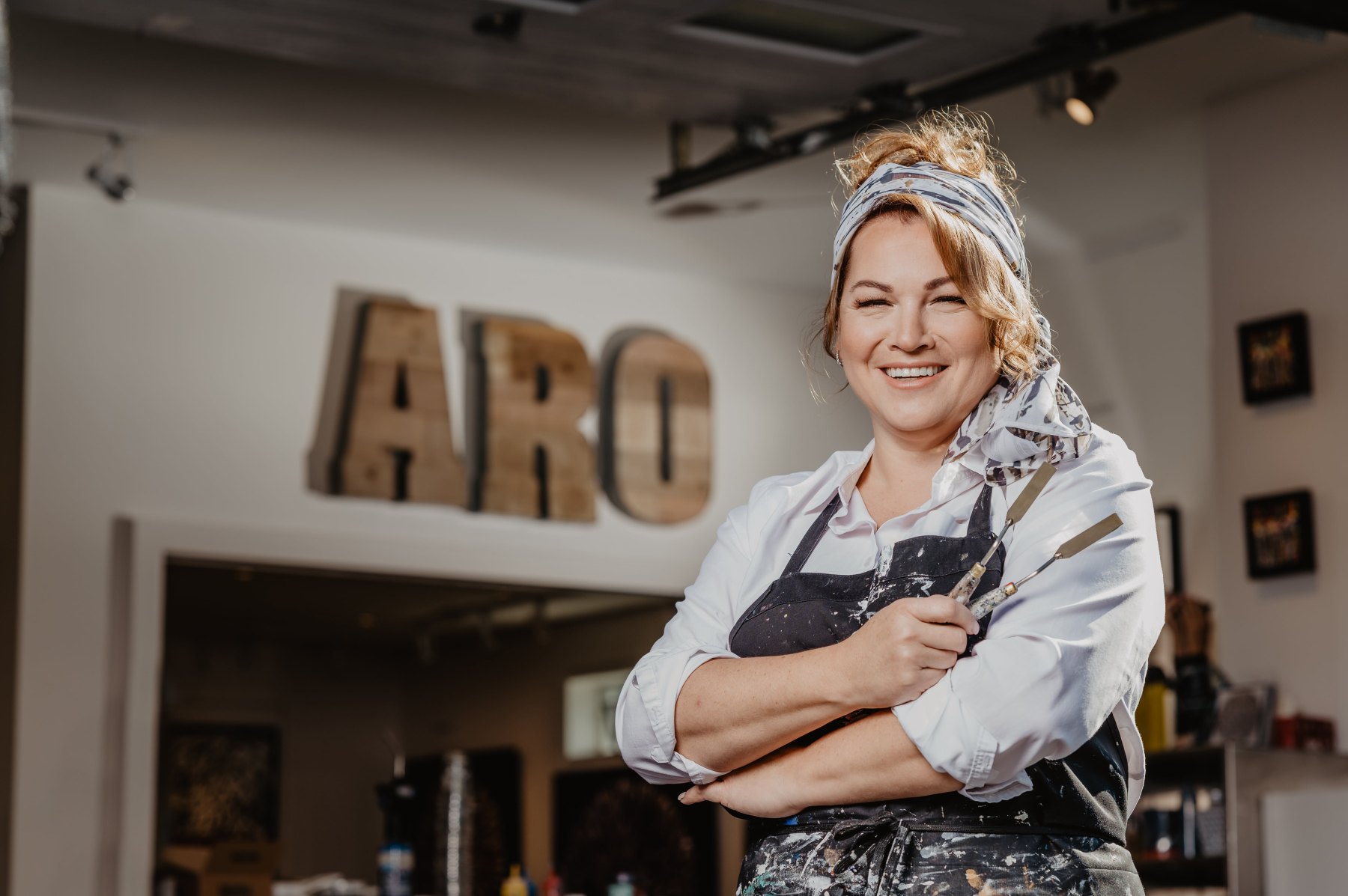
ARO: When Art Chooses You
From a Successful Entrepreneur to an International Artist – A Journey of Emotion, Courage and Creativity
Q1. From Entrepreneur to International Artist – A Life-Changing Transformation
You had already achieved remarkable success as a restaurant entrepreneur before discovering your passion for painting at the age of 42. What happened during that creative workshop that changed the direction of your life so profoundly? Was there a particular moment when you realized that art was not simply a new hobby, but your true calling?
A. On February 4, 2017, at the age of 42, I attended my very first painting workshop. I had no idea that evening would change the course of my life. At the time, I was running two restaurants, and as an entrepreneur, I was constantly taking action, planning, and thinking ahead. That evening, I realized I had spent so much of my life preparing for tomorrow that I had almost forgotten to fully experience today.
And suddenly, standing in front of a blank canvas, I rediscovered little Caroline: the girl who was curious, playful, and free to explore, without comparison, pressure to perform, or expectations.
For the first time in a long while, I simply allowed myself to be present. I felt an extraordinary sense of freedom and well-being, to the point that I completely lost track of time.
I did not leave that workshop thinking I would become a painter. I simply knew I wanted to feel that way again. That desire led me to keep exploring, until painting became a true passion and eventually an international career.
Looking back, I realize that I did not just discover painting that evening. I rediscovered a part of myself I had forgotten. And that may be the most beautiful discovery of this entire journey.
Q2. The Meaning Behind ARO – Art as an Expression of the Soul
You describe your artistic process as painting your emotions, thoughts, and personal experiences rather than focusing on traditional forms or techniques. When you stand in front of a blank canvas, what inspires you to begin, and how do your emotions translate into the movements, textures, and colors of your paintings?
A. When I stand in front of a blank canvas, the first question I always ask myself is, “How am I feeling today?”
My state of mind influences the colors I choose, the movements I make, and even the music I listen to
while creating. But before I begin to paint, I take time to breathe, slow down, and enter an almost meditative state.
That moment of quiet allows me to reconnect with myself, my emotions, and above all, my intuition. My creative process begins to emerge from that inner space.
I never work from a fixed plan or a predetermined result. I allow my emotions to guide my gestures, my colors, and the textures that gradually come to life on the canvas.
Throughout this process, I also write down my thoughts, reflections, and feelings. Those notes become the foundation of the story I write on the back of the painting once it is finished.
For me, painting is not about reproducing what my eyes see. It is about expressing what I feel inside. I paint my emotions, but I give everyone the freedom to find their own in my work.
Q3. The Comparison with Jean-Paul Riopelle – Finding Your Own Artistic Identity
Early in your career, you were described by the media as the "Riopelle of Modern Times," even before you were familiar with his work. How did this unexpected comparison influence your artistic journey?
A. When the media described me as the “new Riopelle of modern times” in 2018, I did not even know who Jean-Paul Riopelle was! I had to discover his work and understand why people were making that comparison.
I quickly realized the importance of his work and his legacy in Quebec and international art history. To receive such a comparison when I had been painting for barely a year was an extraordinary, and rather surprising, recognition. With no formal academic training in visual arts, I developed my practice entirely through intuition, without trying to reproduce a technique or resemble anyone else.
Even today, I make a conscious choice to preserve a certain creative independence. I intentionally limit my exposure to other artists’ work so I can protect my intuition and allow my own artistic language to emerge, without constant comparison or excessive outside influence.
The comparison with Riopelle never made me want to paint like him. Instead, it reinforced the importance of following my own path. I believe an artist’s greatest strength lies in their individuality.
My ambition has never been to become the next Riopelle, but simply to become fully ARO.
Q4. Art Beyond Borders – Connecting People Through Emotion
Your artworks have been exhibited across five continents, including at the prestigious Carrousel du Louvre in Paris, the Museum of Civilization in Cairo, and World Art Dubai. Having introduced your work to audiences from diverse cultural backgrounds, what have you discovered about the universal language of art? How do people from different cultures connect with your abstract paintings?
A. One of the most beautiful discoveries of my artistic journey has been realizing that emotions have no borders. I have had the privilege of presenting my work in several countries, including France, the United States, Egypt, Turkey, and the United Arab Emirates. Each time, I am fascinated by how people from different cultures, languages, and backgrounds can be moved by the same painting.
What fascinates me most is that I paint something deeply personal, inspired by my emotions, my experiences, and my story, yet in the end it becomes universal. That is the beauty of abstract art. It does not dictate what to feel or see. It gives everyone the freedom to interpret a painting through their own experiences and sensibilities.
The same canvas can bring joy to one person, evoke a memory for another, or simply create a sense of well-being. I love listening to people tell me what they discover in my paintings. Sometimes their interpretation is completely different from the emotion I felt while creating the work, and I find that extraordinary.
I create from my own story, but when someone recognizes a part of themselves in one of my paintings, it becomes part of their story too.
Q5. Art as a Luxury – Beyond Financial Value and Social Status
You believe that the true luxury of art lies not merely in its monetary value, but in the emotions, experiences, and connections it creates. In today's global art market, where investment and exclusivity often influence collectors' decisions, how do you define the real value of an original artwork? What makes owning an ARO painting a meaningful and potentially lasting legacy?
A. For me, the true luxury of owning an original artwork begins with the emotions it evokes, the story it tells, and the personal connection we develop with it. It is something that can accompany us every day and be passed down through generations. But I also believe that, as artists, we have a responsibility toward our collectors: to contribute to the long-term value of our work. That means actively developing our careers, expanding our markets, and increasing the reach of our art. In a world where artificial intelligence is rapidly transforming how images are created and reproduced, I also believe that protecting the authenticity of our artworks is becoming essential.
That is why I am especially proud to be the first Canadian artist to offer my collectors the digital passport from Numeraire Future Trends. Using technology that captures each artwork’s unique digital fingerprint, we can verify its authenticity and traceability, while making forgery extremely difficult.
To me, this innovation offers a new way to protect our artistic heritage and pass on artworks whose authenticity can be verified by future generations.
I want my collectors to acquire not only a work that touches them deeply, but also an authentic, protected piece backed by an artistic career I am committed to continually developing.
Q6. The Human Connection – The Stories Behind Every Canvas
You have mentioned that every encounter and relationship influences your creative process, and that you even write the story and emotions behind each painting on the back of the canvas. Could you share a particularly memorable encounter or personal experience that inspired one of your most meaningful artworks? How important are human connections in shaping your artistic identity?
A. I deeply believe that we are the sum of the people we meet. In fact, that is the title I chose for my first book, published in 2024, because this belief shapes both my personal life and my artistic journey.
Everyone who crosses our path leaves a mark. Some encounters inspire us; others challenge us, make us reflect, or help us see life differently. All of those experiences nourish my creativity, whether consciously or unconsciously. One of the most memorable encounters of my career was undoubtedly meeting Michelle Obama, for whom I had the privilege of creating a painting titled Let It Be, inspired by the famous Beatles song.
Beyond her influence and the impact she has had in the United States and around the world, it was the woman herself who deeply inspired me. Her kindness, approachability, vision, and charisma made the experience an unforgettable moment in my artistic journey.
My paintings reflect these encounters and moments in life. Throughout my creative process, I write down my thoughts, emotions, and reflections, which later become the story I write on the back of each canvas.
For me, human connections are an endless source of inspiration. They broaden my perspective, nurture my creativity, and give profound meaning to my work as an artist.
Q7. Empowering Others Through Art – Beyond the Canvas
In addition to being an internationally recognized painter, you are also an author, professional speaker, coach, mentor, and corporate team-building facilitator. Through your creative workshops, you encourage people to discover their own creativity and express themselves freely. What transformation do you hope participants will experience through these activities? Can art help people rediscover confidence, overcome personal limitations, and unlock their hidden potential?
A. I deeply believe that we all have far more potential than we imagine, but that our beliefs, fears, and need to perform sometimes prevent us from expressing it fully. Through my talks, creative workshops, and coaching with entrepreneurs and business leaders, my goal is above all to help people see themselves, and what they believe is possible, differently.
I am convinced that the moment we begin exploring our creativity by making something with our own hands, we discover a part of ourselves we did not know existed. We realize we have abilities we never suspected, and a whole world of possibilities opens up. It is a deeply liberating experience.
When I place participants in front of a blank canvas, I invite them to step outside their comfort zone, let go of judgment, and rediscover the joy of exploring without comparison or expectations. It is exactly what I experienced during my first painting workshop.
In companies, creating a collaborative mural also becomes an opportunity to strengthen relationships, encourage communication, and recognize the value of each person’s differences within a team.
What moves me most is not the artistic result, but the transformation I witness when participants realize they can accomplish something they never thought possible.
I often say that to do well, you first need to be well. I believe creativity can help us reconnect with that sense of well-being, confidence, and freedom. That is what I hope to share through my work: inspiring people to believe in themselves, dare to try, and become the artists of their own lives.
Q8. Your Legacy and Vision – What Comes Next for ARO?
You have described your artistic journey as a continuous story of encounters, possibilities, and personal evolution. Having achieved international recognition and attracted distinguished collectors, including Michelle Obama, what would you most like your art to represent for future generations?
Looking ahead, what are your ambitions for ARO, and is there a particular country, culture, or artistic
collaboration you would love to explore next?
A. When I look back at my journey since 2017, I realize how much life can surprise us when we dare to step off the paths we thought were already mapped out for us. If I could leave a legacy for future generations through my art, I would want it to convey authenticity, vulnerability, and originality. I would want my paintings to remind people that we do not have to be perfect to be extraordinary, and that we are already enough just as we are.
That belief — “I am enough” — is deeply rooted in my philosophy of life. It invites us to accept ourselves, recognize our worth, and dare to be fully who we are.
Of course, I still have great ambitions for ARO. I want to continue growing my career internationally, introduce my artistic world to new audiences, and build lasting relationships with galleries and collectors around the world.
I would also love to collaborate more with artists from different cultures. Human encounters have always been at the heart of my journey, and I am convinced they will continue to open doors I cannot even imagine today.
The United Arab Emirates is one market I particularly want to develop, with the ambition of presenting a solo exhibition there and building long-term artistic and professional collaborations.
But beyond recognition and achievements, what matters most to me is to keep creating freely, and for my paintings to stand the test of time and continue to move people.
I hope that 50 or 100 years from now, someone discovering an ARO painting will feel the freedom to be themselves, with their strengths, imperfections, and unique qualities — and remember that they, too, are enough to dare to pursue their dreams.
Q9. Art Connects Women – Inspiration, Women's Artistic Empowerment, and Your Vision for the UAE
Following your participation in ‘Art Connects Women’ in the UAE this November, what inspiration or memorable impressions did you take away from this experience? Through your interactions and artistic exchanges with women artists from diverse backgrounds and cultures, were there any new perspectives or discoveries that particularly resonated with you?
How has this experience influenced your artistic journey, and what are your aspirations and vision for the future of your art in the UAE? We would also love to hear about the new possibilities and meaningful connections you hope to create in collaboration with the local art community.
A. Taking part in the ninth edition of Art Connects Women in Dubai, as the only artist representing Canada, was a truly enriching experience.
What initially drew me to the event was the opportunity to meet women artists from different cultures, discover their journeys and perspectives, and see the many ways they express their creativity.
Above all, I realized that beyond our cultural differences, we share common ambitions: to make our work known, grow professionally, earn a living from our art, and continue building our careers.
I also became more aware of the importance of mutual support among artists. By sharing our experiences, knowledge, and networks, we can multiply opportunities and create collective possibilities that benefit us all.
My participation also had a very specific strategic purpose: to return to Dubai and continue developing my artistic and professional network, with the goal of presenting a solo exhibition there in 2027.
Dubai fascinates me with its cultural diversity, energy, and ability to bring together people from all over the world. I see it as a particularly exciting place to introduce my work to new collectors.
My goal is not simply to exhibit internationally, but to build authentic, lasting relationships with artists, galleries, and collectors. I leave this experience convinced that human connections and collaboration are powerful ways to move our artistic careers forward and create new opportunities, both individually and collectively.
 By Evangeline Elsa

 By Misook (Mia) Jung